Affichage des articles dont le libellé est Gamakatsu. Afficher tous les articles

mardi 23 février 2016

Japan Kebari: Masami "Tenkara-no Oni" Sakakibara

It is rare to have the opportunity to meet the people who inspire us and thanks to whom we have developed a passion for something but I am gifted to have the pleasure to go fishing with the man who made me discover tenkara: Masami Sakakibara


With his thirty five years experience in the field of tenkara Masami Sakakibara's style is the perfect illustration of the highest skilled master. Faithful to the basic principle of tenkara "A rod, a line, a fly"
he has developed his technique instead of carrying a lot of tackle. Oni tenkara is not only simple but also very efficient and it is explicit when one sees his kebari and thinks a little about it. I think that the Tenkara-no Oni style of fly tying can be resumed by a simple motto: "design matches function".


This kebari tied by Masami-san is probably his most famous pattern. He is used to name his patterns from the materials used, in this case "Oni black pheasant kebari". What has in first place made this kebari famous among western tenkara anglers is its size as Masami-san ties it on hooks up to size 2. But function dictates design and size and this kebari is designed to be used in the sasoi technique.


Masami-san uses Tiemco "pellet dubbing", which is a natural substitute for seal fur, for the body of this kebari; a hen pheasant feather on a Gamakatsu S10 hook.
The next kebari is Masami-san's interpretation of a Mayfly, a huge ephemera, it is realistic by its size but impressionistic by its design.  I think that this describes very well Tenkara-no Oni style of fly-tying.


The body is made of polypropylene yarn and that is a good product if one wants low floatation kebari. The hackle will give the illusion of life to this kebari when on the water surface. 


If fishing big streams with long level lines has become a kind of hallmark of Tenkara-no Oni style he is also a very experienced and skilled small streams tenkara angler as I got to realize during my stay with the Team Oni in the mountains. 


To fish in shallow mountain streams small sized , in relation with the observable small insects, and light kebari are needed to obtain natural drifts. Masami-san is accosumated to tie his small sized kebari on Tiemco 2499-SP BL hooks that as he says have great features for small streams tenkara fishing: short shank, wide gap and laser sharp point. 


Masami Sakakibara's experience shows that it is possible to practice successful tenkara fishing on any water with his "simple" kebari because he has developed his technique on rational analysis of his fishing and fish behavior. 


Masami-san has developed over the years a tenkara fishing system that is not only simple but also very effective. I would even personally say that the Oni tenkara style has become so effective because it has been kept simple throughout the years. While fishing with him in the mountains I understood why his nickname is "Tenkara-no Oni", the Tenkara demon. As he says himself: "A tenkara angler must be one with the stream". 


If you want to learn more about Masami Sakakibara and the Oni tenkara style I invite you to check his awesome blog


samedi 5 décembre 2015

Japan Kebari: Yuzo Sebata

During my stay in Japan I, as tradition dictates, traded kebari with tenkara fishermen I met. The first step of my journey gave me the opportunity to meet Yuzo Sebata who made me gift kebari he tied himself.


Sebata-san is used to tie his kebari without a vise vise and with only a pair of scissors. He preferably uses Gamakatsu hooks in size Kantsuki Yamame 号 8 or 9. We have all seen on the internet kebari inspired by Sebata-san's ties but it is rare to see reproductions made with the materials used by Sebata-san including the model in the center of the picture whose body is made of self-fusing usually used tape by electricians.
The Zenmai-dou of Sebata-san is tied backwards like a sakasa kebari but the whip finish is done behind the hackle after the thread has been wound in wide turns about the shaft so as to solidify the tying.


Sebata uses cock neck, hen neck or parttridge flank feathers for the hackle of his kebari depending on what he has available when he needs to tie some kebari. 


The kebari of Sebata-san are simple because they are the fruit of a long evolution and in line with a technique. Those considered in Japan, and elsewhere by the sincere enthusiasts, as tenkara masters are those who have developed techniques of their own.


I am certainly not the only one who has noticed that all the great tenkara anglers such as Sebata-san, his tenkara career is over fifty years long, have remained faithful to the basic principle of tenkara:
rod, line, kebari.


lundi 10 mars 2014

"AMAGO HAN SUREHINERI" GAMAKATSU HOOKS

Since the beginning of the year I started exploring the Japanese Tenkara tackle market and particularly the hook offer. References are many and varied.
Today I have received some Gamakatsu "Amago Han Surehineri" hooks.


What does this name mean?
AMAGO:  Endemic salmonid species of Japan, one of the iconic Tenkara game.
HAN: means "half" 
SURE: means "thread" 
HINERI: means "twist" 

So we can translate AMAGO HAN SUREHINERI by "small barbed curved point hooks for Amago".

These are fine wire eyeless hooks with a metallic green finish, the curved point is to make hook setting more efficient. The small barb is really tiny so tiny I wonder if I have to do as usual and crush it with a clamp and risk to damage the point.


Like the rest of Gamakatsu's range these hooks are of prime quality and also very affordable as I paid only 200 ¥ or 1.93 $ for each pack that contains 15 hooks. 

The only fault of these excellent is that the more I buy the less I have in stock!


vendredi 14 février 2014

GAMAKATSU NANO-GURE HOOKS

For some time I have been exploring the jungle of Japanese tackle companies websites and I can hardly believe how extensive are the catalogs. We believe in the west to know the Japanese tackle market but I think we only have access to the visible part of the iceberg. Hundreds if not thousands of references remain unknown to us.
Today my post will deal with hooks, Gamakatsu's Nano-Gure.


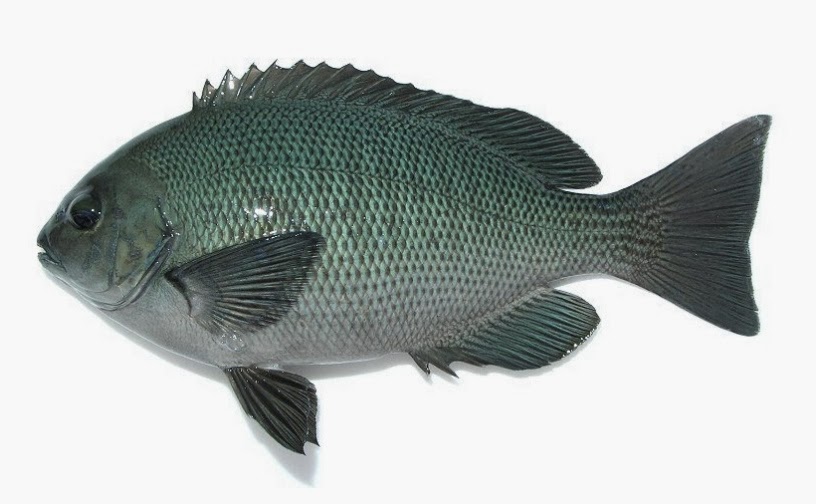
Let's start by the beginning! These hooks are called "nano-gure" which means that they receive a nano coating and that they are originally destined for fishing Gure also known as Mejina.


These hooks characteristics are:
-Narrow and short shaft
-Flat wire
-Ultra slick surface


It is not something new for me to use saltwater fishing hooks to tie freshwater flies because I have been doing it for streamers for years so I thought it would be interesting to try some for wet flies. These nano-gure seemed interesting to me because of their wide gape, super sharp point and very small barb that will be easy to crush.
A few days ago I posted a picture of these hooks on my Facebook and someone asked me if I bought these hooks in Japan...yes, I did! One can of course find some of the Gamakatsu references in the west but I am realistic and prefer buying them at their real price in Japan and having them delivered at home.
These excellent hooks are sold in bags of 20 for the affordable price of ¥300 (USD 2.90)...Why pay more?


Thanks to Keiji Ito-san and Yoshinori Yoshitake-san for their interpreter talent. Without your help it would have taken me a full day to translate this label!